Cape Verde is an archipelago where volcanic landscapes collide with endless turquoise waters. While many travelers anchor themselves exclusively to the lively resort hub of Santa Maria on Sal Island, the true magic of this country lies in exploring both its local hidden gems and neighboring islands.
Whether you are looking to lounge on pristine sands, walk among volcanic craters, or wade alongside sharks, here is your definitive guide to the best spots in and around Cape Verde.
The Heart of Sal: Santa Maria & Environs
Most adventures begin in Santa Maria, a vibrant town on the southern tip of Sal Island known for its pastel buildings, surf culture, and infectious No Stress motto.
1. Praia de Santa Maria (Sal)
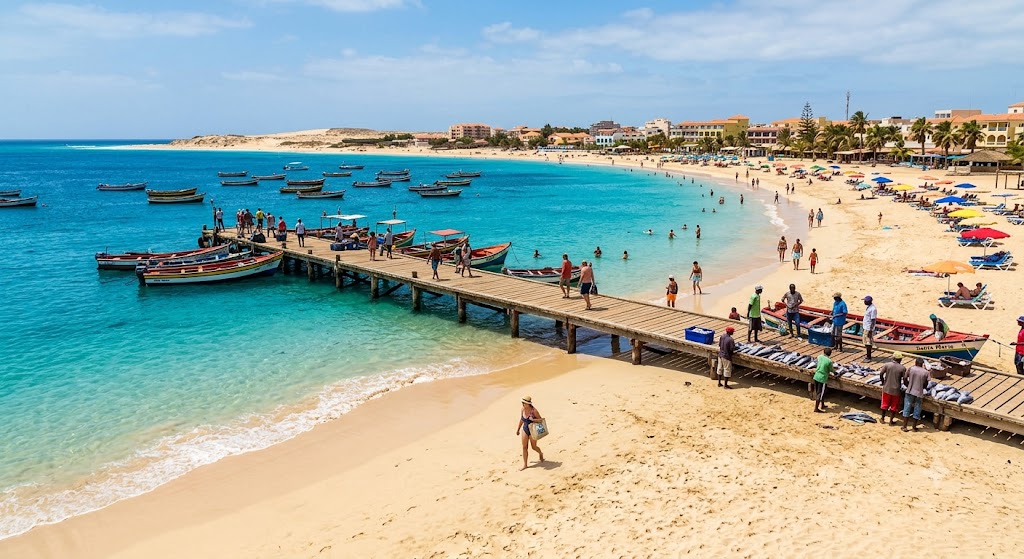
This is the island’s flagship beach. Stretching for miles, its fine, golden sand meets a mesmerizing, transparent turquoise sea. The epicenter of life here is the historic wooden pier. Every morning, local fishermen haul in fresh tuna and wahoo, creating a bustling, colorful spectacle. It’s perfect for swimming, paddleboarding, or grabbing a cold Strela beer at a beach shack.
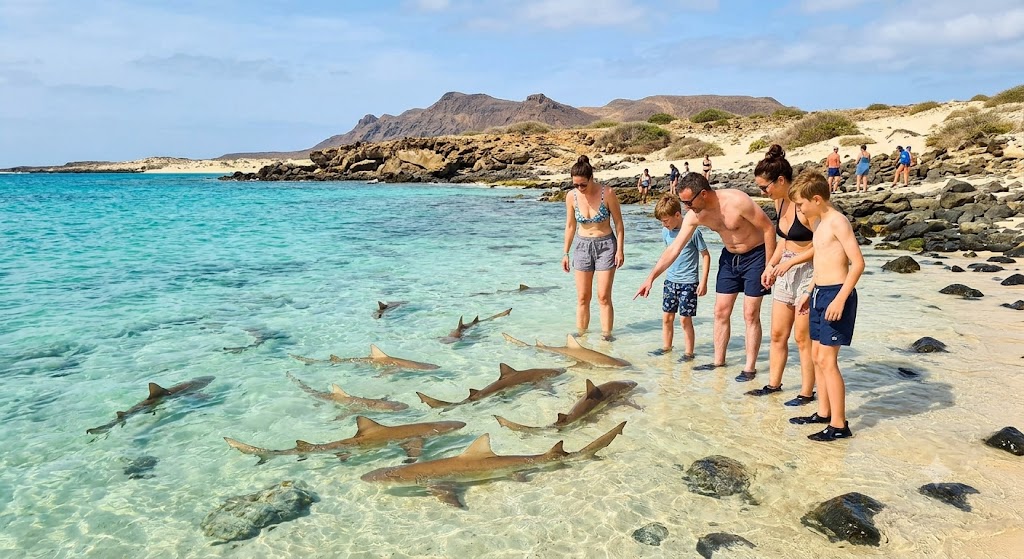
2. Shark Bay (Sal)
Just up the eastern coast from Santa Maria lies a rocky shoreline where you can wade into the Atlantic alongside wild lemon sharks. Don’t worry—these sharks are non-aggressive bottom-feeders that grow up to several feet long. You will need to rent a pair of rubber water shoes from locals on the shore to navigate the sharp volcanic rocks. Standing knee-deep while their dorsal fins glide past your legs is unforgettable.
3. Projeto Biodiversidade (Sal)
Located near the Riu hotels on the western coast of Santa Maria, this non-profit NGO operates a crucial turtle hatchery. From July to December, loggerhead sea turtles lay their eggs on these beaches. If you visit during nesting or hatching season, you can book an evening eco-tour to watch conservationists protect the eggs or help guide tiny hatchlings safely to the ocean.
4. Viveiro, Botanical Garden & Zoo di Terra (Sal)
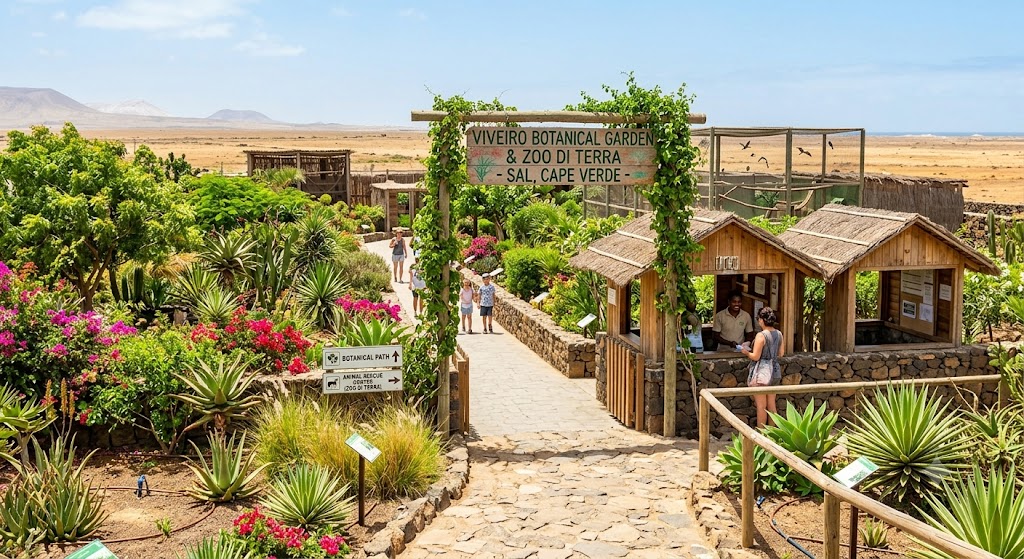
A literal oasis in the middle of Sal’s desert landscape. This beautifully maintained botanical garden showcases what can grow when irrigation is applied to arid soil. It is home to a rescue center featuring local animals like donkeys, goats, monkeys, and exotic birds. It’s a peaceful, green retreat away from the coastal winds.
5. Pedra Lume Salt Crater (Sal)
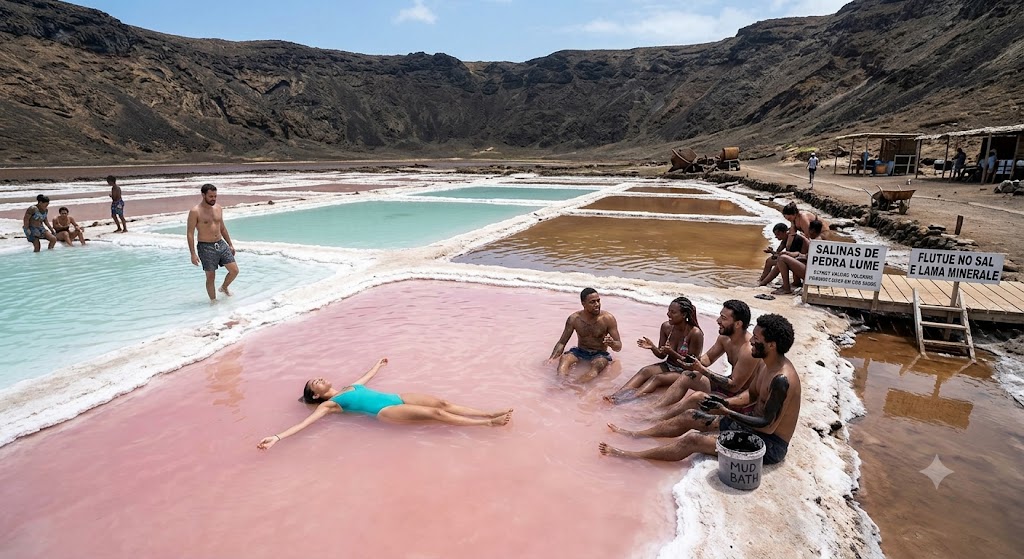
Located inside the caldera of an extinct volcano, these ancient salt pans sit below sea level. Infiltration from the nearby ocean creates water that is 27 times saltier than normal sea water. The high density means you can effortlessly float on the surface, mimicking the experience of the Dead Sea. The mineral-rich mud is also great for exfoliating your skin.
6. Buracona – Olho Azul (Sal)
On the rugged northwestern coast, the ocean crashes violently into black basalt rock formations. The main draw here is the Olho Azul (Blue Eye)—a natural underwater cave openings. When the sun hits the water at the perfect angle (typically between 11:00 AM and 1:00 PM), it illuminates a pool of brilliant, electric blue that looks exactly like a glowing eye.
Exploring the Neighbors: Boa Vista, Santiago, & Fogo
To truly experience Cape Verde’s diversity, you need to hop on a domestic flight or ferry to explore the contrasting terrains of neighboring islands.
7. Santa Monica Beach (Boa Vista)
Named after its famous counterpart in California, this untouched beach on Boa Vista Island is arguably the most beautiful in the archipelago. Stretching for nearly 11 miles (18 km), it offers massive sand dunes and wild, rolling Atlantic waves. It feels completely isolated from civilization—just you, the desert sands, and the open sea.
8. Praia de Chaves (Boa Vista)
Another Boa Vista gem, Praia de Chaves is famous for its dramatic, sweeping sand dunes that literally spill right into the ocean. The wind constantly reshapes this desert-meets-sea landscape, making it a favorite spot for long walks and dramatic sunset photography.
9. Tarrafal Beach (Santiago)
Located on the northern tip of Santiago (the most culturally African island), Tarrafal is framed by dramatic green mountains and lined with coconut palms. It offers much calmer waters than the windward islands, making it an excellent spot for swimming alongside local fishing boats. The surrounding town is rich in history and traditional music.
10. Pico Do Fogo (Fogo)
For adventure seekers, this is the crown jewel of Cape Verde. Pico do Fogo is an active stratovolcano and the highest peak in the country, rising over 9,200 feet (2,829 m) above sea level. Hiking up the steep ash trails to the summit gives you panoramic views of a surreal, pitch-black volcanic landscape. The descent is an exhilarating “ash-skiing” run straight down the loose scree.
DISCOVER THE CAPE VERDE ISLANDS
Frequently Asked Questions
What is the best way to travel between Sal, Boa Vista, Santiago, and Fogo?
Because Cape Verde is an archipelago spread across the Atlantic, the best way to move between islands is by domestic flight. Cabo Verde Airlines handles most inter-island routes. Ferries are available but are generally slow, prone to delays due to rough seas, and less reliable for tight holiday schedules.
When is the best time to see the turtles at Projeto Biodiversidade?
The loggerhead nesting season runs from July to October, with peak activity in August. The eggs hatch from September to December. Evening guided tours during these months give you the best chance to see turtles nesting or hatchlings heading out to sea.
Is it safe to swim at Shark Bay and Santa Monica Beach?
Shark Bay: Yes. The lemon sharks in the shallow waters are small and docile; they pose no threat to humans. However, the rocky ground is sharp and slippery, so you must wear protective water shoes.
Santa Monica Beach: While beautiful, this beach faces the open Atlantic and is prone to fierce undercurrents and massive waves. It is highly recommended for sunbathing and walking rather than deep swimming.
Do I need a guide to hike Pico do Fogo?
Yes, hiring a local guide is mandatory and highly recommended for your safety. The trail consists of loose volcanic ash and steep inclines, and paths change frequently due to shifting scree. A guide ensures you stay on a safe path and supports the local economy inside the volcanic caldera.
How much does it cost to enter the Pedra Lume Salt Crater and Buracona?
Pedra Lume: Entry is roughly €5 (approx. 550 CVE), and there is an optional small fee to use the freshwater showers afterward to rinse off the salt.
Buracona: Entry is roughly €3 (approx. 330 CVE).
What is the best time of day to see the “Blue Eye” at Buracona?
Timing is everything for the Blue Eye. You need to visit between 11:00 AM and 1:00 PM, when the sun is directly overhead. This allows the sunlight to shine straight down into the cave opening, illuminating the brilliant blue color. On cloudy days, the effect won’t be visible.
Cape Verde Travel Itinerary